
The government will press ahead with its stalled privatisation programme and sell stakes in two refiners, Hindustan Petroleum Corp Ltd and Bharat Petroleum Corp Ltd, Divestment Minister Arun Shourie said.

Moody's Investors Service on Wednesday raised the rating outlook for 18 Indian corporates and banks, including Reliance Industries, Infosys, SBI and Axis Bank, to 'stable' from 'negative'. This follows the upgrade by the US-based rating agency in India's sovereign rating outlook to 'stable' from 'negative' on Tuesday. The agency had affirmed the sovereign rating at 'Baa3'.

Russian energy giant Rosneft has appointed a former Indian Oil Corporation (IOC) director to its board in signs it may be looking at boosting trade links with India. G K Satish, who retired as director for business development at IOC in 2021, is one of the three new faces appointed to the 11-strong board of directors of Rosneft, according to a statement issued by the Russian firm. Satish, 62, is the first Indian to be appointed to the board of Rosneft.

'There's significant interest from both existing and new sponsors who recognise the value of associating with Olympic athletes.'
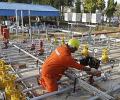
Ongoing strategic investment into assets abroad, alongside gas purchases being made by India, will soon allow the country to access as much gas as it needs, Petroleum and Natural Gas Minister Hardeep Singh Puri said on the sidelines of India Energy Week (IEW 2025).
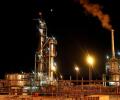
Escalation of the conflict in West Asia between Israel and Iran has had a direct impact on the energy markets, and more broadly on the financial markets as well as the global economy.
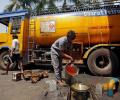
After a spike in crude oil and gas prices in October following the Hamas terror attack, prices eased down 9 per cent month-on-month in November. The Organization of the Petroleum Exporting Countries (Opec) and Opec+ agreed to a further voluntary production cut in January-March 2024 to try and support global crude prices. The best guess here is that crude prices (currently at $75/barrel, or bbl) will not likely cross significantly above $80, and gas prices are also likely to remain subdued unless there's a further escalation in the Israel-Hamas conflict.
Bharat Petroleum scored a 2-1 victory over the defending champions to improve their chances of making it to the final of the 44th Bombay Gold Cup Hockey Tournament.
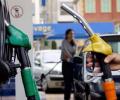
International oil prices continue to be extremely volatile, falling on one day and rising thereafter, a top oil ministry official said explaining the reason behind no reduction in petrol and diesel prices despite softening in input cost, but could not say if the rates will be cut before Maharashtra elections. Global oil benchmark Brent crude futures fell below $70 per barrel last week -- the first time since December 2021 -- but gained thereafter. Brent was trading at $74.58 per barrel on Thursday while West Texas Intermediate advanced to trade at $71.71.

Noting that Gandhi had claimed that armed forces can restore peace in the state within days if allowed, BJP leader and former Union minister Ravi Shankar Prasad wondered if he wanted what his grandmother and then prime minister Indira Gandhi had done by ordering the Air Force to drop bombs in Aizawl in the 1960s.

Jet fuel or ATF price on Wednesday was cut by almost 6 per cent after four rounds of monthly increases since July, while commercial cooking gas (LPG) rates were raised by a steep Rs 101.5 per 19-kg cylinder in line with international benchmarks. However, the price of domestic LPG - used in household kitchens for cooking purposes - remained unchanged at Rs 903 per 14.2-kg cylinder. Aviation turbine fuel (ATF) price was cut by Rs 6,854.25, or 5.79 per cent, in the national capital to Rs 111,344.92 per kl from Rs 118,199.17, according to a price notification of state-owned fuel retailers.

Capital expenditure (capex) by 54 large central public sector enterprises (CPSEs) and five departmental arms with an annual capex target of Rs 100 crore and above has reached around 42.5 per cent of their annual target of about Rs 7.33 trillion in this financial year so far, a senior official from the Ministry of Finance told Business Standard. "The Centre is pushing the big public undertakings in the infrastructure and refinery sector to achieve 90 per cent of their target by the end of the third quarter," he said. The capex by this group of CPSEs stands at around Rs 3.1 trillion in the April-August period so far.
India's third biggest state-owned refiner Bharat Petroleum may invest in oil and gas blocks in South East Asia as it expands it production assets, especially in the view of soaring demand for fuel.
Bharat Petroleum made the grade from Pool Y of the semi-final league stage on goal difference.

Indian Oil Corp is ranked highest at 161st in the Fortune 500 list.
Jet fuel or ATF price on Tuesday was hiked by a steep 8.5 per cent - the second increase in a month, while commercial cooking gas rate was cut by Rs 100 per cylinder in line with divergent trends in international benchmarks. Aviation turbine fuel (ATF) price was increased by 7,728.38 per kilolitre, or 8.5 per cent, in the national capital to Rs 98,508.26 per kl, according to a price notification of state-owned fuel retailers. Rates, which vary from state to state depending on the incidence of local sales tax or VAT, have been increased on firming up of global rates that followed four months of decline.
Punjab and Sind Bank will lock horns with Indian Oil in the final of the Surjit hockey tournament.
The state-run Oil and Natural Gas Corporation may buy stake in Bharat Petroleum Corporation's 6 million tonne Bina Refinery.

Arun Kumar Singh, former chairman of oil refining and marketing company BPCL, was on Wednesday appointed chairman and managing director of ONGC -- the first instance of a retired person being appointed the head of a Maharatna PSU. "The Appointments Committee of Cabinet (ACC) has approved the proposal of ministry of petroleum and natural gas for appointment of Arun Kumar Singh, ex-CMD, BPCL as chairman, ONGC for a three-year tenure with effect from the date of his assumption of charge of the post," an official order said. PTI first reported of Singh's appointment on November 17.
There is no payment problem for Russian crude, Petroleum and Natural Gas Minister Hardeep Singh Puri said on Wednesday. He said there is no proposal to cut retail fuel prices at the moment. Addressing a press conference, the minister said India enjoys a buyers' position and foreign suppliers are approaching Indian companies with offers to sell oil.
Stocks of Hindustan Petroleum Corporation Limited (HPCL), Bharat Petroleum Corporation Limited (BPCL) and Indian Oil Corporation Limited (IOCL) have more headroom left despite the sharp run in the last few weeks, suggests a recent report from Morgan Stanley. Stocks of these oil refining and marketing companies (OMCs), it believes, are seeing multiples re-rate as investors reassess long-term growth prospects. "IOCL trades at one year forward P/BV of 1.2x, 19 per cent below +1 standard deviation (SD); BPCL trades at one year forward P/BV of 1.5x, near historical averages; HPCL trades at one year forward P/BV of 1.5x, near +1SD," Morgan Stanley said.
India's crude oil imports from Russia fell for a second straight month in January to its lowest in 12 months but the nation's insatiable appetite for Russian crude remains for the long term, according to data from energy cargo tracker and industry officials. Russia supplied 1.2 million barrels per day of crude oil to India in January, down from 1.32 million barrels in December and 1.62 million barrels in November 2023, according to data from energy cargo tracker Vortexa. Russia however continues to remain India's top oil supplier, accounting for a little less than a quarter of 4.91 million barrels a day of oil that the world's third largest energy consumer imported in January.
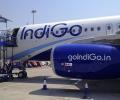
Airfares in the country are set to rise, with IndiGo on Thursday introducing a fuel charge of up to Rs 1,000 based on a flight's distance, in response to the significant rise in aviation turbine fuel (ATF) prices in the last three months. The Indian aviation sector experiences its peak travel season between October and December. The inclusion of a fuel charge component in airfares is anticipated to have a sizable impact on IndiGo's passengers, according to experts.

Notwithstanding the recent sharp decline in the stocks of public sector companies, analysts at Jefferies remain bullish on this segment. State Bank of India, Coal India, and NTPC are their top picks in this space, they said in a recent note. The public sector undertaking (PSU) or state-owned enterprise (SOE) index, with a 70-percentage-point outperformance versus the National Stock Exchange Nifty50 over the past 12 months, comes after a decade of underperformance before 2020.

Companies are ranked by total revenues.

Notwithstanding concerns about lofty valuations, smallcaps recorded their most significant monthly gain in nearly three years in November. The National Stock Exchange Nifty Smallcap 100 finished the month with a 12 per cent gain, the most since February 2021 when it rose by 12.2 per cent. After declining by 4.1 per cent in the preceding month, the Nifty Midcap 100 rose by 10.4 per cent, the most since July 2022.

HPCL, Bharat PetroResources Ltd -- a unit of state-owned Bharat Petroleum Corporation, Gujarat State Petroleum Corporation and Videocon Industries each have 14 per cent interest in the block.

Sources said a meeting of heads of the oil marketing companies -- Indian Oil, Bharat Petroleum and Hindustan Petroleum -- was called off.

IOC protests, says have invested in these facilities over a period of time.

Drivers of commercial vehicles, including trucks and tankers, stopped work in several states on Monday and blocked roads at some places to protest against the provision in the new penal law regarding hit-and-run accident cases involving motorists.

The 12-digit unique number that the UIDAI will generate will be combined with the the smart card project of the Oil Ministry for distribution of PDS kerosene and domestic LPG through biometric identification of beneficiaries.

Petroleum and Natural Gas Regulatory Board in its July 2 order imposed a cost of Rs 100,000 on the three private fuel retailers who filed a complaint against Indian Oil, Bharat Petroleum and Hindustan Petroleum for indulging in 'restrictive and unfair trade practices and cartelisation'.

A consortium of Bharat PetroResources, Videocon Industries and the US-based Anadarko Petroleum Corp have discovered additional oil in their block in the Campos basin, off the Brazilian coast.
The state-owned refiner has offered 15,000 tonnes in a tender.
They want more cash, forex, higher bond coupons and increase in market prices for petrol, diesel, LPG.

The three oil PSUs have told Air India that if it did not make the monthly lump sum payment, they will stop fuel supply from October 11 at six major domestic airports.
The Supreme Court on Monday adjourned hearing till Friday on a petition challenging the decision of the government to divest its stake in oil PSUs HPCL and BPCL.

With the new Bharat Stage IV emission norms coming into effect from Thursday, oil companies are gearing up to meet the requirements of Mumbai, an official said on Friday.

'The Paris Olympics has once again blessed the Indian sports marketing landscape with fresh faces and promises.' 'Expect at least one biopic.'
Investors shunned shares of oil marketing companies (OMCs) on Friday as they feared that the government's decision to cut retail prices of petrol and diesel could hurt the companies' profit margins in the near term. On Thursday, the government announced that OMCs will reduce pump prices of petrol and diesel after a record 22 months, making them cheaper by Rs 2 per litre in the national capital. The changes were effective from Friday.
